
Black Medic

Black Medic
*Medicago lupulina
Today, I want to talk about another little plant that came to settle here in my yard, along with the settlers that came many moons ago. We talked about this a bit in my writings on Wormwood, another plant here on the Palouse. Black Medic, called so by the seed pods that turn black, is also called Nonesuch, or Hop Clover, It is a tiny yellow clover, and likes to hide in lawns and well worn paths.
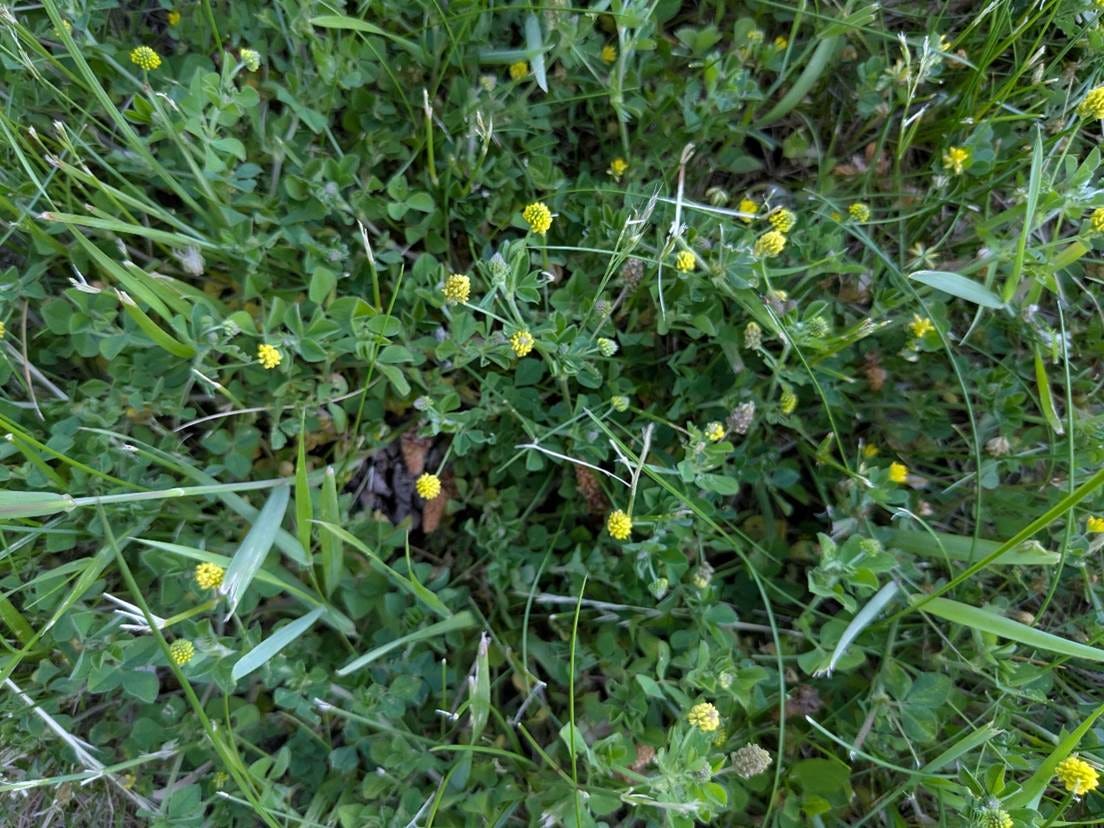
A patch of Black Medic, in a yard can signify lack of Nitrogen in the soil
Medicago lupuliana most likely came with feed for livestock, as people moved westward across the United States. It is a plant of the Old World, and has naturalized many other places. Lets take a look at the leaves a little closer…
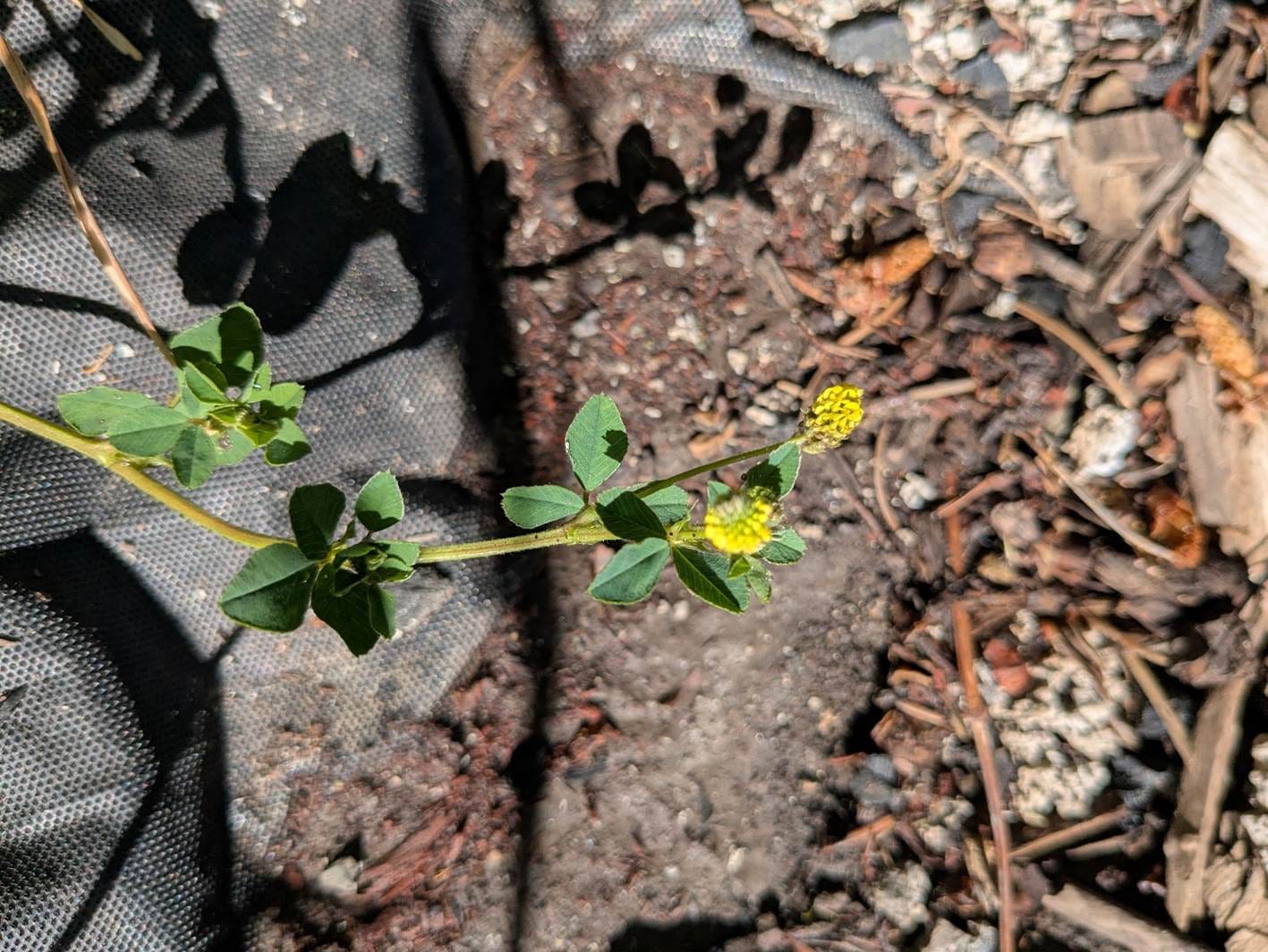
Notice the toothed bit on the tip of the leaves, this indicates it is Black Medic, Medicago lupulina
The seed heads of these tiny flowers will turn black when ripened, hence the name Black Medic… Now that we know we have the right plant, lets talk about its medicine…
How about a little science, for you so inclined…
Medicago lupulina L. (Fabaceae), M. lupulina is a traditional edible plant and rich source of various bioactive and nutritional compounds. The adult plants and its microgreens contain significant amounts of primary metabolites such as carbohydrates, including galactomannans [28] starch and soluble sugars, as well as proteins [29]. They are rich in triterpene saponins, mostly derivatives of soysapogenol and medicagenic acid [30]. Furthermore, aerial part of M. lupulina contain significant amount of various biologically active groups of phenolic compounds such as coumestanes, isoflavonoids and other flavonoids [29]. The flavonoids and other phenolic antioxidants in the plants were shown to be responsible for an excellent antioxidant, antiradical and reducing activity [26]. Furthermore, the published in vitro studies have shown that M. lupulina leaf extract has a pronounced antibacterial, antifungal and antitumor effect [31]. M. lupulina is closely related to M. sativa, well known medicinal plants used for the treatment of various disease related to oxidative stress such as arthritis, kidney disorders, as well as disorders of cardiovascular system [26]. However, while the activity of M. sativa is well known and recognized, the possible therapeutic applications of M. lupulina remain largely unknown.
There aren’t many studies done on this plant, lets hope they explore more of its helpful nature in the future.
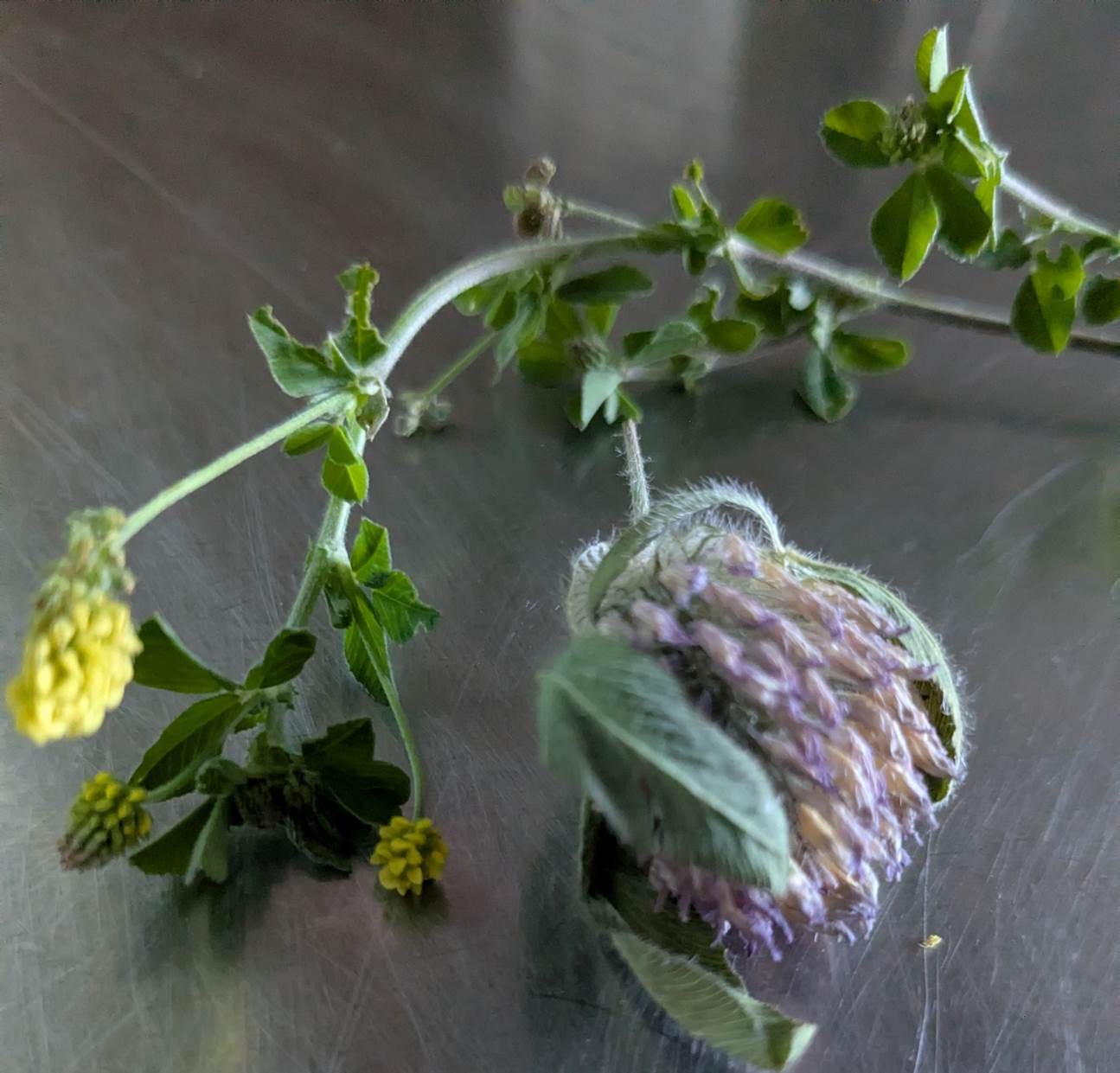
Compare the tiny yellow flowers to Red Clover. It is not a true clover; however, it is more closely related to Alfalfa- Medicago sativa
I have learned about this plant from my teacher Matthew Wood, in his lectures. It is use for things like brain fog and inflammation of the brain, associated with things like Alzheimer’s. As an alterative, it helps clear the blood of toxins We know about Red Clover, helping move the lymph, and being soothing for the throat in coughs and colds, and helping remove cysts. Medicago, helps with eliminating buildup in the brain. We see above, how much smaller the flowers and leaves are compared to its cousin Red Clover. We can ponder that, this tiny cousin, helps with the much tinier capillaries in the brain, helping the lymph of the brain clear out debris and buildup.. The brain, with it’s very specific blood brain barrier, that tries to keep toxins out that could harm us, sometimes has a harder time releasing the inflammation and neurotoxins that have built up.
We would want to make sure our lymph here is moving well, and the channels of elimination are open, so our talk on The Lymphatic System, is a good place to start, before adding any plant to help with inflammation in the brain. (Kudzu, Red Sage, Baikal Skullcap, would also be good choices depending on the type of inflammation we are working with.) My go to for this, as we are talking about the head, would be cleavers infused oil, applied around the base of the skull and jaw line.
Basic infusion – 1 to 3 times a day
Tincture – I simple this herb in 50% alcohol.
Drop dose 5 to 15 drops a day, twice a day.
*This plant is not as thoroughly studies as some of its other family members.
To be safe, we want to consider:
Not to be used during pregnancy
Not to be used with someone with Lupus
Not to be used with someone on blood thinners
And to be extra cautious;
Not to be used with someone with estrogen dominate cancers.
Yes, I know that is a lot of cautions, but better safe than sorry. We could always try our friend Kudzu, for a more gentle and safe approach. I just wanted to share Black Medic with you, as it is common, and useful. Two things I enjoy about sharing plants.
If you are part of the Matthew Wood Institute of Herbalism, I believe Lise Wolff talks about this plant in more detail.
I hope you found this information helpful. If you have questions, comments or personal experiences please leave them below.
The information shared in these writings are for enrichment and educational purposes only. As always seek your personal health care provider in implementing any such information. Any application of this material made by the readers discretion is the readers’ Sole responsibility.