
Cold and Flu-Angelica
*Angelica sinensis- Dong Quai *Angelica archangelica -European Angelica

These plants are similar in use from both TMC and European traditional usage, they are not exactly the same. Dong quai is reported to be better as a tonic, and the A. archangelica not used so much in this way. We are talking about the HMGB1 formula from Buhner’s work, and cytokine storms, however as this plant is such a BIG plant, I will go into some other uses, as I feel it is important to its supportive function, and understanding its medicinal and spiritual uses throughout history.
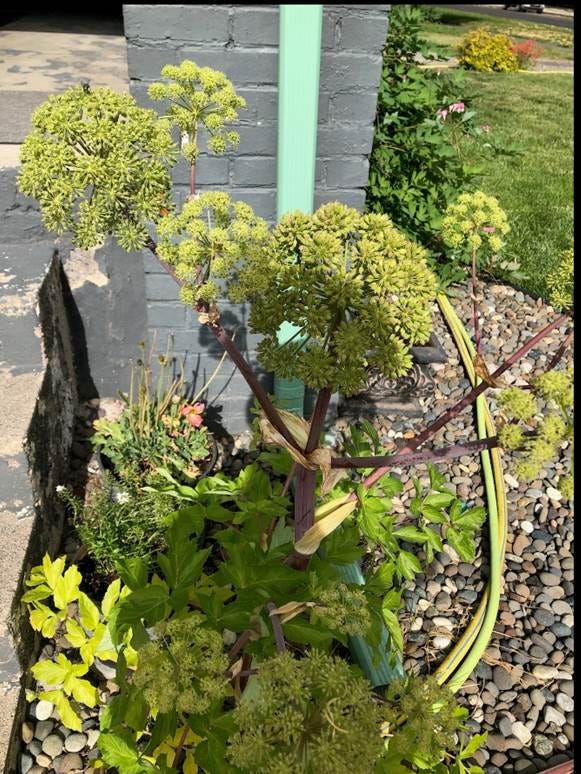
Aangelica archangelica
Lets start with growing these plants. You can purchase seeds from Strictly Medicinal seeds. I have grown the A. archangelical, and it is an excellent plant to have in the garden. It is generally a biannual where I live. The first year it will grow a nice little plant, much like Celery or Lovage. If you want to keep this plant as more of a perennial plant, a plant that comes back every year, you need to cut down the flowering seed heads every year, before they put on seeds. The leaves and stocks especially were used in Victorian times. They make a beautiful blue green semi-transparent candy, that somewhat resembles candy straws as the stems are hollow. (yes, the foodie in me just sneaks out sometimes….) Angelica is in the same family as Osha, and is also warming and spicey.
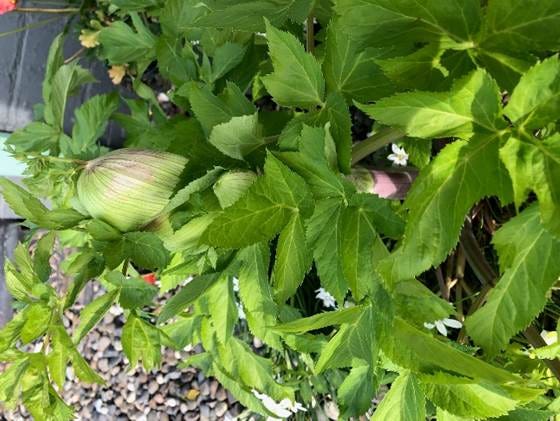
The Roots, if we are keeping it as a perennial like we talked about above, can be harvested in the spring or the fall, which is traditionally when the medicine is strongest. If we are growing it as a biannual, we would want the first-year plants root in the fall, or the 2nd year plants root in the spring. Like most biennials, we want the strength of the medicine to be in the root, before it uses its stored energy to put on leaves, and make flowers and seeds.
We use dried root to make medicine, as the roots contain an oil that can irritate the mucus membranes.
wash your roots, and cut them up, slices, or chunks, and let dry. Dry root of both types of Angelica can be found in commerce quite easily. The seeds can also be used as medicine and spice., much like we have talked about with Lomatium, another plant in this family. They would make a great addition to tea blends.
I am a drop dose person, 1 to 5 drops for me is a good dose to start with.
Root Tincture 1:5 dry root 65% alcohol
15 to 60 drops up to 5 times a day
Seed Tincture 1:4 dried seed 75% alcohol
15 to 60 drops up to 5 times a day
Tea, dried root or seed simmer 20 minutes,
1 Tablespoon to 1 cup water
4 to 6 ounces, up to 4 times a day
*not to be used during pregnancy
It is used by the Saami and Laplanders of Europe, and considered a Bear medicine by our native tribes. Named after Angels, we connect to the Angelic realm in a good way. You can also burn this on a coal as a smudge, much like Osha and Lomatium, to help clear the air and support the lungs, and help with dreaming. A flower essence is another excellent way to use this plant for connection and protection. Plants can hold sacred space for us to heal and do our personal work.
“Angelica aligns you to walk with your guardian angel” Julia Graves
Wood writes of A. archangelica
“The root of angelica is brown, furry, oily, and pungent-the picture of a “bear medicine” in American Indian medicine. Bear eats such roots in the spring to wake up and start rebuilding his mass. Other members of this group include osha, lomatium, American liquorice, balsam root, and spikenard. They stimulate the cortisol side of the adrenal cortex, to increase appetite, digestion, and nutrition. Hence, they are suited to thin pale, undernourished people. In European phytotherapy, it is said that angelica calms both the sympathetic and parasympathetic sides of the autonomic nervous system. When the sympathetic is overactive it creates a condition of nervousness and shuts down the digestion, creating a condition of “asthenia” -the pale, thin, dry, vata type. When the parasympathetic is dominant we have a condition if gastrointestinal excess, creating a hot digestion with heavy, damp, cool interior. Because angelica effects the circulation, the thin types may have purple fingers, from poor peripheral circulation, while the the thick ones may have blue-green-yellow-grey- coloration around their veins (look at the forearms) due to blood stagnation.”
Here we see angelica working on the endocrine system (adrenal cortex) digestion, as well as circulation. It also has effect on the lymphatics and helps bring nutrition to all parts of the body.
Now lets take a bit to talk about Dong quai- Angelica sinensis
Cabrera writes “This is a well-known herb in TCM , highly regarded for building and nourishing blood, moving blood, and reducing stagnation and congestion in the tissues, especially abdominal organs (viscera) and reproductive organs. It is warming, moistening, and relaxing. It is prescribed for states of depletion, exhaustion, and debility”. ….. another important point she makes “In my clinical practice, I am likely to avoid using dong quai in a patient with a cancer known to overexpress estrogen receptor sites, but in cancers that are not hormone related, especially where there is debility and depletion, don quai can be a key part of a restorative program.“
A.Sinensis is also used in Ayurvedic medicine, a decoction or a decoction in milk are traditionally used. Also used as a tonic especially for the female system, it is often combined with Shatavari (asparagus root) In addition to its tonic uses it is used for cold and flu, to bring on a sweat, and for rheumatoid conditions.
Tierra works with both varieties, and I feel his thoughts are a good place to settle. He writes “There are many varieties of wild angelicas growing in the mountains throughout North America. One of these, A. brewerii, found in the California Sierras, seemed a promising substitute for the Chinese dong quai and the author has used it in his clinic with comparable results. The common Garden angelica (A archangelica) has the emmenagogic blood moving properties of dong quai but lacks the degree of sweetness necessary for tonics.”
Today we are exploring angelica for its use in cytokine storms, calling on its blood moving properties in this circumstance, along with its helpfulness in opening the skin and supporting the endocrine, and autonomic nervous systems. If you have access to the A. sinensis that Buhner recommends, that is a great thing. If you have A. archangelica, or another wild variety growing here in the US. it seems like a valid substitute.
Here is a scientific study on Angelica sinensis for you to dive into…
If you have questions, comments or personal experiences please leave them below.
The information shared in these writings are for enrichment and educational purposes only. As always seek your personal health care provider in implementing any such information. Any application of this material made by the readers discretion is the readers sole responsibility.
References
Buhner, Stephen Harrod. Herbal Antivirals. North Adams MA: Storey Publishing, 2013.
Chanchal Cabrera MSc, FNIMH, RH(AHG). Holistic Cancer Care. North Adams MA: Storey Publishing, 2023.
Kloos, Scott. Pacific Northwest Medicinal Plants. Portland, Oregon: Timber Press, Inc, 2017. Book.
Tierra, Michael. Planetary Herbology. Twin Lakes WI: Lotus Press, 1988.
Wood, Matthew. The Earthwise Herbal A Complete Guide to Old World Medicinal Plants. Berkeley California: North Atlantic Books, 2008.